Pokazywanie postów oznaczonych etykietą green tea. Pokaż wszystkie posty

czwartek, 26 września 2019

Warsztat z koreańskiej drogi herbaty w Anmo w Duesseldorfie

Wiele już wydarzyło się na mojej drodze herbaty, miałem przyjemność poznać fantastycznych ludzi, udało mi się, właśnie dzięki herbacie, kilkakrotnie gościć w Korei. Wydawało mi się, że to i tak bardzo dużo, jak na jedno życie. Okazuje się jednak, że to wcale nie musi być wszystko, co zostało dla mnie przygotowane.

Podczas odwiedzin u przyjaciół w Duesseldorfie w 2018 roku trafiłem na niezwykłe miejsce, ulokowane w centrum miasta, a dla każdego herbaciarza rozpoznawalne na pierwszy rzut oka, dzięki ceramice w oknach wystawowych.

Anmo, bo tak się nazywa, to galeria sztuki i herbaciarnia w sercu Duesseldorfu, prowadzona przez dwie przyjaciółki ze studiów: Annę Friedel i Motoko Dobashi. To miejsce, gdzie herbata łączy się ze sztuką, ponieważ właścicielki, absolwentki uczelni artystycznej, chciały połączyć tam obie swoje pasje.

Pierwsza moja wizyta w Anmo polegała na tym, że zajrzałem do środka, przywitałem się... i skończyło się na trzech godzinach picia herbaty i snucia opowieści.
Po powrocie do Warszawy zawsze chętnie wracałem do wspomnień tego niezwykłego dnia i kiedy nadarzyła się możliwość odwiedzić Duesseldorf ponownie, od razy przyszedł mi do głowy pomysł: a może, zamiast tylko pić herbatę, zrobić jeszcze coś dla nich? Tak narodził się plan zorganizowania w Anmo warsztatu koreańskiej drogi herbaty.
Cieszyłem się na możliwość podarowania im czegoś od siebie, poznania tamtejszych herbaciarzy i spojrzenia na niemiecki świat herbaty, byłem bardzo podekscytowany.

Spotkanie odbyło się pod koniec lipca, w największe upały, jakie nawiedziły Zachodnią Europę tego lata, jednak wszystkim gościom udało się dotrzeć, a pierwsze łyki najlepszych koreańskich herbat pozwoliły zapomnieć o  niewygodach.

Pierwszą herbatą, którą zaparzyłem, na samym początku spotkania, był Sejak. Zacząłem od herbaty z drugich zbiorów, żeby przywitać gości, pozwolić im ochłonąć i wsiąknąć w atmosferę spotkania. Dopiero potem mogliśmy przejść do opowieści o herbacie w Korei, zdjęć i kolejnych degustacji.

Po omówieniu historii kultury herbaty w Korei, kiedy wszyscy byliśmy już w pełni skupieni na temacie spotkania, przyszedł czas na gwiazdę tego popołudnia, czyli Woojeon, herbatę zieloną z pierwszych zbiorów, najwyżej cenioną w Korei. Jej delikatny, lecz mocno wyczuwalny aromat zachwycił wszystkich, jeszcze zanim nalałem napar do poszczególnych czarek. Po pierwszym łyku wszyscy zamilkli, a po ich twarzach widać było, że tę herbatę zapamiętają na zawsze.

Następnie przyszedł czas na kolejne opowieści: o herbacie w Korei obecnie, o ceramice, koreańskiej ceremonii herbaty, po których zaparzyłem Balhyo-cha (Pario-cha), myśląc, że po zielonych rarytasach, ta herbata będzie to po prostu miłym zakończenie oficjalnej części spotkania. Okazało się jednak, że i ona zachwyciła wszystkich. Miło było widzieć, że u innych wywołuje ona taką samą reakcję, jak u mnie.

Pijąc kolejne parzenia Balhyo-cha (jak to dobrze, że ta herbata jest tak wydajna!) mieliśmy wszyscy okazję do luźnej rozmowy na tematy herbaciane, na dzielenie się wiedzą i umiejętnościami, na wspólne poznanie się. Nie sądziłem, że i ja wyniosę z tego spotkania tak wiele dla siebie, ani tym bardziej, że tych kilka godzin sprawi, że zyskam kilkoro bardzo dobrych herbacianych przyjaciół.
Być może zadziałał po prostu entuzjazm, z jakim chciałem podzielić się tym, czego samemu doświadczyłem i czego mogłem się nauczyć. Być może to coś więcej, jak to bywa na Drodze Herbaty...


czwartek, 11 lipca 2019

Visiting masters of ceramics

During this year's expedition to Korea, this time as a member of the Herbaty Czas teahouse crew, I had the opportunity to visit a few masters of Korean ceramics, drink tea with them and talk a lot about the tea culture in Korea.

In today's post I would like to introduce you to what this visit looks like and why it is such an important experience for me.


Master Im Man-jae's teahouse


Masters of ceramics do not live in random places, their location results from the availability of clay, wood, a certain distance from large cities: ceramics who I met are involved in the production of ceramics fired in wood furnaces, it is the most valued type of firing, giving the most expensive varieties of ceramics, however, the proximity of such a furnace can be cumbersome.

Iside Master Im Man jae's teahouse


They usually live in the villages and to get to them, a car is needed (I do not know what we would have done without our great Ms. Pak, who took us everywhere).

Master Im Man-jae preparing tea
 

Each master of ceramics has their own workshop, a space for making tea in the form of a dedicated room and a small exhibition of his works, both in the place where tea is brewed or in a separate room, if the exhibition is expanded.


Beautifully served tea sweets


The first part of the visit is always tea, brewed by the master, in his own vessels, in a specially designed room full of his works. Such tea meeting is an aesthetic experience. Although this is by no means a ceremony, the atmosphere is lofty, calm, focused, supported by the view of the beautiful ceramics, both the one from which we will soon drink tea, as well as the ones displayed around. There is no mess, chaos, disorder. Each element has its meaning and place, although one does not feel the tension of discipline, on the contrary, the atmosphere is filled with cordiality and joy of meeting.

Master Kil Sung's tea room


Teas made by masters are Korean teas, hence most of the summer we will drink green leaf teas (Woojeon or Sejak), green powdered tea (mal-cha, also called kkaru-cha) and regardless of the season of the year, highly oxidized, gently fermented Balhyo-cha, a Korean specialty.

It also happens that at the end of the meeting, the host may prepare herbal tea.


Master Kil Sung's works


After tea and conversation (usually quite long and very valuable), it's time to watch the exhibition of ceramics, accompanied by the master, so one can ask for any object, consolidate the newly acquired knowledge. And to admire, because it really is something.

Tea prepared by the daughter of Master Shin Bong-gyun


And when we have asked about everything, we can ask for one more thing, to show the furnace for firing ceramics, which the master will do with pleasure. Such a furnace is usually located next to the tea room, it is usually the size of a large garage and is an attraction in itself. Several chambers, capable of accommodating at least one person, placed one behind the other. During the viewing of the furnace, the master once again talks about how he works, how much time the firing takes and how much energy and work it requires. You can then understand why some people even decide to just have one firing in a year. And why their works must cost as much as they cost.

 
Tea space at Master Shin Yong-kyun's gallery...


and tea prepared by his wife.


At the end, there is a cordial goodbye, bows (which can be as cordial and as grateful as our hugs) and time to leave, trying to sort out everything that has happened in the last moments. Just do it quickly, because Ms. Pak is already taking us to the meeting with the next master... 

Master Shin Bong-gyun is showing us the furnace, photo: Małgorzata Devos

Master Kil Sung's furnace, photo: Małgorzata Devos
 

sobota, 12 maja 2018

Yunnan Mao Feng Green Tea

This is another tea which I once found at a Vietnamese grocery shop. The brand is Kandy's, just like white tea which I described some time ago.


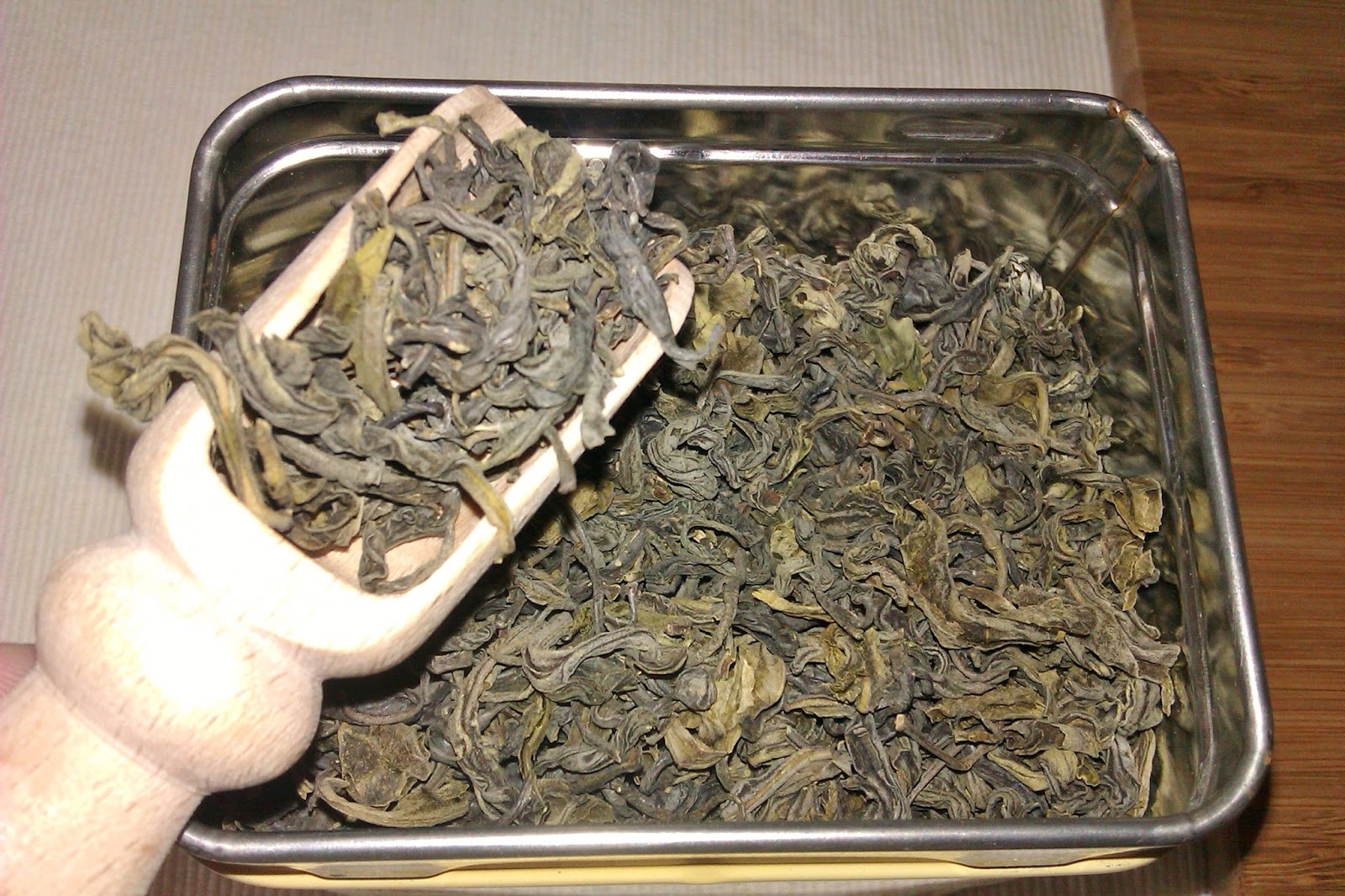
The dry leaves look surprisingly big for green tea. Their scent is also more mature. 


After transferring the dry leaves to a pre-heated vessel, I could smell something which reminded me of tea from Burma, like a wet forest, moist wood, but in a rather unpleasant apect. 

When steeping this tea, I followed my typical green tea procedure: one minute-short-one minute-long. I used water of 80 degrees. The producer suggests 85 degrees, but I have noticed that this little difference in temperature does not affect the taste of the tea at all.


The tea smells more like white tea. The scent is not very dominant, though. However, there is nothing I usually look for in green tea: no grass, vegetable, fresh taste. The colour of the tea is also more yellowish than greenish. Once again I look at the quite big leaves and wonder if their size is a result of using the big-leaf variety of tea tree, or maybe the leaves are simply older.


This tea does not taste bad. The resemblance of white tea is interesting. It just does not have anything I want in green tea.

czwartek, 3 maja 2018

Tea of the Morning Calm 2

I still have some green Korean tea from last year. It does not taste very good now, time has not been very gentle with it. It is green tea from Gurye region, at Jiri mountain in the very south of the Korean Peninsula. I did have some other tea from that area, the package was identical. So it looks like all tea is put in the same packages, and then they put different label stickers on them.


Still, I wanted to give it a chance. It would be a pity to just throw it away. After all, it is a good tea from Korea (or it was good last year).


Recenlty, every time I steep this tea, it comes out without much taste, sometimes even a bit bitter. But making tea early in the morning is different. The mind is fresh, not polluted with the thoughts of everyday chores and issues. And if you get up early enough, you can be sure no one will bother you when you make tea.


I used my Korean travel set. It comes with a steeping vessel with a lid and a cup, which later can be put atop of the steeping vessel thus making a very convenient package. It is a one-person tea set.


To make the tea I used 70 degrees C water (80 degrees culd have been too much, after all it is Korean tea and the leaves are rather small). I steepied it three times: 1 minute - very short - 1 minute.


The tea was good! It was fresh, with the typical grass-like taste, there was even some sweetness. It was definitely the tea's was to say "thank you" for paying most attention to it.


The travel tea set has it's own pouch


piątek, 30 marca 2018

Matcha for the first time

It it not the first time I have tried matcha, but it is going to be the first time I write about it. Last year, in late Summer, I received some instructions from my teacher, Sayama, on how to prepare matcha in the most basic way taught in tea schools in Japan. Since then, I have been practicing almost every day.


As you can see in the photos, I still do not have all the necessary accessories. I do have the chasen whisk, the chashaku spoon, the fukusa cloth (the violet one, which you can see in some other photo) and, of course, the chawan bowl. I bought the chawan from Sayama, who said it was made by a Korean pottery master.
To replace the still missing chakin hemp cloth, I use a piece of gauze cut to the required size. And I still do not have a proper natsume tea container, so I am using the original package in which the tea is sold.

At the beginning of my Way of Tea, I did not want to start making matcha by myself, knowing that it is a sophisticated and elaborate art. I just did not want to make mistakes or acquire a wrong attitude so I just waited for the right time to come. Fortunately, Sayama shared some if his knowledge with me.


Just as I had supposed, it turned out to be a demanding practice requiring lots of concentration and discipline. It would be hard if it did not appeal to me as much as it does.
Somewhere deep inside me I felt learning how to prepare matcha would eventually affect all my life. The tranquility and quietness is something I have always liked. The concentration and discipline help me cope with everyday chores better. As they say: "how you do one thing is how you do everything". In other words, if you learn to prepare tea attentively and with a sincere heart, focusing on tea, clearing your mind of the unnecessary clutter, you soon realise you want the same in all other aspects of your life. The tea aestetics soon became my favorite and finally led me to minimalism, which, so to speak, saved my chaotic and overburdened life from a disaster. I found that to be very true even before learning matcha. Preparing leaf tea in an attentive way has the same effect, only that matcha, with all its philosophical and cultural background, seems to have a stronger effect.


My favourite time to prepare and drink my matcha is early in the morning, when the whole world around me is still sleeping and all is quiet. Starting the morning with silent practice sets the whole day. Almost impercebtibly I have become an early morning person.

sobota, 28 maja 2016

Biała Małpa *White Monkey

Jakiś czas temu czytałem i słyszałem od innych miłośników herbaty o herbacie Biała Małpa i kiedy zauważyłem ją w jednym ze sklepów z herbatą, pomyślałem, że i ja spróbuję. To ciekawa herbata, ponieważ jest czymś pomiędzy herbatą zieloną a herbatą biała, lub może herbatą zieloną z pewnymi cechami białej. Wynika to z tego, że jej liści nie poddaje się tak szybko działaniu wysokiej temperatury mającej na celu zatrzymanie procesu więdnięcia (oksydacji), jak w przypadku herbat zielonych. 

Dlaczego "Biała Małpa"? Podobno nazwa wzięła się od tego, że liście tej herbaty przypominają łapy małp. Szczerze mówiąc, nie wiem, nie widuję małp na tyle często, żeby móc się wypowiedzieć. (A nieprzyjemna pani na poczcie, to już zupełnie inna historia).
Liście są ładne, młode, widać jeszcze delikatny meszek. Co do koloru, powiedziałbym, że są szarozielone.

*Some time ago I read and heard from other tea enthusiasts about White Monkey tea and when I came across it in one of the tea shops I decided to give it a try. It is an interesting tea because it is something between green tea and white tea, or maybe a green tea with some features of white tea. It is a result of the producing process, when the leaves of White Monkey are not processed with high temperature, to stop it from further oxidation, as soon as green tea leaves.

Why "White Monkey"? They say the name comes from the shape of the leaves which are supposed to resemble monkey paws. To be honest, I do no know much about it, I do not see monkeys in real life often enough to be able to say anything about it. (And the rude lady at the post office is another story).
The leaves look nice, they are young, you can even see the delicate hairs. As for the colour, I would say it is grey-greenish.


Mimo wyjątkowych cech tej herbaty zdecydowałem się zaparzać ją tak, jak herbatę zieloną. Liście w rozgrzanym czajniku pachną bardzo przyjemnie, świeżo. Napar ma kolor bardziej żółto-złoty niż zielony. Napar z pierwszego parzenia jest bardzo smaczny, świeży, roślinny, jak napar z innych dobrych herbat zielonych. Kolejne parzenia mają już tylko kolor, w smaku są żadne; wielka szkoda, bo pierwsze parzenie jest naprawdę dobre.

*Despite the special features of this tea I decided to steep it the same way I steep green tea. The leaves, when put into a pre-heated teapot, give a nice, fresh smell. The infusion has a more yellow-golden colour rather than green. The infusion from the first steeping is very tasty, fresh, grassy, like other good green teas. The subsequent steepings only result in colour, there is no particular taste; too bad because the infusion from the first steeping is really good.


Liście wyjęte z czajnika po skończonym parzeniu ujawniają pewną tajemnicę: ta konkretna herbata nie była najwyższej jakości. Oprócz całych lub prawie całych liści widać strzępy i pocięte kawałki. W takim razie do Białej Małpy na pewno jeszcze wrócę, jeśli znajdę ją gdzie indziej i będę mieć pewność, że będzie lepszej jakości. Nasze pierwsze spotkanie należało wszak do miłych.

*When the steeping was over I took the wet leaves out of the teapot and they revealed a secret to me: this particular tea was not the best quality. Apart from whole or nearly whole leaves there were many particles, shreds of leaves. So it means I will be back with this tea some other time if I find it again and if I am sure it is better quality. After all, the first encounter was a good one.


Możecie o tej herbacie poczytać również u Agnieszki i Łukasza.

czwartek, 5 maja 2016

Herbata Porannego Spokoju *Tea of the Morning Calm

Udało mi się ukończyć długie i trudne tłumaczenie, wobec czego dzisiejszy poranek był pierwszym naprawdę spokojnym od dłuższego czasu. Wstałem wcześnie, zjadłem małe śniadanie i zająłem się przygotowaniem wody. To był idealny dzień na własną ceremonię, o której marzyłem od dawna. Wokół mnie było bardzo cicho, reszta świata albo jeszcze spała, albo cicho szła na tramwaj ziewając.

*I managed to complete a long and hard translation so today's morning was the first really qiuet one in a long time. I got up early, had a little breakfast and began preparing the water. Today was the perfect day for my own ceremony, which I had dreamed of for a long time. All around me it was very qiuet, the rest of the world was either still asleep or walking to the tram-stop and yawning.
 

Dzisiaj moją poranną herbatą był Sejak. Wybór nie był przypadkowy, poranny spokój najlepiej uczcić herbatą z Korei, z Kraju Porannego Spokoju. Przygotowałem swój koreański zestaw do herbaty: czajniczek, sugu (miseczka do studzenia wody) i czarkę od Anety Zatyki, która moim zdaniem idealnie pasuje do zestawu.

*Today's morning tea was Sejak. The choice of it was not random, as the morning's calm is best celebrated with tea from Korea, the Land of the Morning Calm. I prepared my Korean tea set: a teapot, sugu (a little bowl to cool down water) and a teacup made by Aneta Zatyka which, in my opinion, is a perfect match with the Korean set.


Ten dzisiejszy Sejak, to herbata, którą dostałem od Roberta. Jej pierwotnym zadaniem było nauczyć mnie jak wygląda prawdziwa koreańska herbata dobrej jakości. I rzeczywiście, są to piękne, delikatne, młode liście. Wsypane do rozgrzanego czajniczka pachną pięknie, roślinnie, świeżo, z bardzo delikatną nutą czegoś prażonego.

*I got today's Sejak from Robert. Its original purpose was to teach me what real Korean good quality tea looks like. Indeed, the leaves are beautiful, delicate, young. When put into the pre-heated teapot, they give a wonderful, grassy, fresh scent with a touch of something like roasted. 


Gorącą, świeżo zagotowaną wodę nalewam do sugu. I już, nie mierzę temperatury. Już wcześniej (przy pomocy termometru) odkryłem, że zagotowana woda przelana do sugu w moim zestawie od razu osiąga temperaturę odpowiednią dla zielonej herbaty. Przestudzoną wodą zalewam herbatę i... no właśnie, skoro uwolniłem się od termometru, to może warto uwolnić się też od stopera? Sejak potrzebuje 1 minutę 30 sekund przy pierwszym parzeniu, co daje 90 sekund. Umiem przecież liczyć do dziewięćdziesięciu, a mój zegar głośno tyka, na pewno więc mi pomoże. No, to zaczynam.

*I pour the hot, freshly boiled water into the sugu. And that is it, I do not check the temperature. Before, I discovered (with the help of my thermometer) that freshly boiled water cools down immediately to the temperature perfect for green tea when it is poured into my sugu. I then pour the cooled water into the teapot and... right, if I could set myself free from the thermometer, why not try to set myself free from the timer as well? Sejak needs 1 minute 30 seconds at the first steeping, which makes 90 seconds. I can count to ninety and my clock ticks loudly, which could help me a lot. So there I go.


Liczenie w myślach okazało się lepsze, niż przypuszczałem. Pozwoliło zająć czymś mózg, a ja mogłem cieszyć się ciszą, spokojem i lekkim szumem miasta przygotowującego się do pracy. Czas minął, przelałem herbatę do sugu (bo równie dobrze może ono służyć jako cha hai - morze herbaty) i zaraz potem do czarki. Ten zapach! Smak również niesamowity, mocno roślinny, wyraźny, mocno wyczuwalny, ale nie agresywny, z delikatnym posmakiem czegoś prażonego lub może orzechowego. Co za wspaniała chwila!

*Silent counting in my mind turned out to be much better than I had expected. It helped me make my brain busy and I could enjoy the silence, tranquility and the light hum of the city getting ready to work. Soon the time was over, I poured the tea into the sugu (it can as well serve as the cha hai - the fairness cup) and to the teacup. The scent! The taste was very good, too. Very grassy, noticeable but not aggressive, with a bit of an aftertaste, something like roasted or like nuts. What a wonderful moment!


Łączne wykonałem trzy parzenia, każde kolejne trwało nieco dłużej niż poprzednie.
Tak rozpoczęty dzień po prostu musiał być udany. I był :)

*Altogether I made three steepings, each next one was a bit longer than the previous one.
A day started this way simply had to be good. And it was :)


wtorek, 19 kwietnia 2016

Zielona herbata z Wietnamu *Green tea from Vietnam

Jakiś czas temu dowiedziałem się, że można w Warszawie kupić zieloną herbatę w wietnamskich sklepach spożywczych. Zaciekawiło mnie to i postanowiłem spróbować. W tym celu wybrałem się na wycieczkę do centrum handlowego przy ulicy Marywilskiej i w gąszczu butików odzieżowych odnalazłem kilka sklepów spożywczych, w których rzeczywiście były pokaźnych rozmiarów opakowania zielonej herbaty, a także wiele innych ciekawych, orientalnych artykułów. Ale celem mojej podróży była herbata i to na niej się najbardziej skupiłem. 

*The other day I found out I could buy green tea in Vietnamese grocery stores in Warszawa. It seemed very interesting and I decided to give it a try so I went on a trip to the shopping centre at Marywilska Street. In the ocean of cloth stalls I managed to find the very few grocery stores. Indeed, they had big packs of green tea, along with other interesting, oriental food products. But tea was the reason why I went there and I stayed focused on it.


Tutaj chciałbym opisać tę, którą spróbowałem jako pierwszą, czyli zieloną herbatę niearomatyzowaną, z regionu Thai Nguyen, który słynie z produkcji herbaty. Rejon ten znajduje się w północnym Wietnamie, jest zatem położony bardzo blisko kolebki herbaty. Robert Tomczyk w "Zapiskach o herbacie" wspomina, że w Wietnamie herbaty z rejonu Thai Nguyen cieszą się największą popularnością. Jej cena w sklepie wietnamskim jest zastanawiająca, bo to jedynie około 4 zł za 100g. Podzieliłem się moimi wątpliwościami z innymi herbaciarzami, ale usłyszałem, że taka cena może wynikać po prostu z braku pośredników i kosztów marketingu.

*Here I would like to describe the tea I tried as first, which is non-scented green tea from Thai Nguyen area, famous for tea production. This area is located in northern Vietnam so it is very close to the cradle of tea. Robert Tomczyk wrote in his book "Zapiski o herbacie" ("Notes on Tea") that Thai Nguyen teas are very famous in Vietnam. The price of this tea made me wonder for a while because it is only around 1 Euro per 100 grams. I asked other tea enthusiasts and some of them said the low price may simply be a result of no agents or marketing expenses.


Liście w opakowaniu wyglądają ładnie, są poskręcane, nie są drobno pocięte, mają zielony kolor. Zapachu specjalnie nie wydzielają. Magia dzieje się po przesypaniu ich do rozgrzanego czajniczka. Wyraźnie czuć roślinne nuty, wzbogacone czymś w rodzaju podprażania. Ten zapach skojarzył mi się z herbatami z Korei. Byłem zaskoczony, bo kupowałem tę herbatę raczej pełen obaw i z nastawieniem, że nie będzie mi specjalnie smakować. Herbatę polecam parzyć krótko, bo jej sporym minusem, jak dla mnie, jest to, że bardzo się przeparza i szybko nabiera goryczy. Ja parzę ją regularnie około minuty, każde kolejne parzenie trwa tyle samo, nie przedłużam ich. Używam wody o temperaturze około 80 stopni Celsjusza.

*The leaves in the package look nice, they are curled, not cut too much and green. There is no particular smell. The magic happens when I put them into a pre-heated teapot. I can clearly smell fresh, grassy tones, enriched with something like roasting. The smell reminds me of Korean teas. I was surprised at first because when buying this tea I supposed I would not like it very much. I suggest steeping this tea for a short time as there is a drawback - this tea gets oversteeped easily and acquires some bitterness quickly. I steep it regularly for about a minute, each subsequent steeping is the same and I do not make them longer. I use water at 80 degrees Celsius.


Przy przelewaniu naparu do morza herbaty znowu czuć ten zachęcający zapach, który pojawia się wcześniej przy suchych liściach w rozgrzanym czajniczku. Napar ma kolor słomkowo-żółty.

W smaku herbata jest, powiedziałbym, poprawna. Po zapachu spodziewałem się czegoś lepszego, jednak w smaku te roślinne nuty są słabiej wyczuwalne. Można je poczuć i są przyjemne, jednak mam wrażenie, że trochę giną. Nawet przy tak krótkim parzeniu wyczuwalna jest delikatna goryczka, chyba nie do uniknięcia. Próbowałem też parzeń w niższych temperaturach, krótszych itp, jednak smak herbaty był wtedy słaby, a goryczka i tak się pojawiała. Dla mnie jest ona wadą, ale wiem, że są herbaciarze, którzy goryczkę lubią.

*When I pour the tea into the tea pitcher I can smell the fragrance of the tea again. The infusion is yellow.

The taste of the tea is, I would say, merely fine. Judging from the fragrance I would expect something better but when I drink the tea, the fresh grassy taste is weaker. I can feel it and it is nice but I have a feeling that it is lost somewhere. Even with steeping being so short I can still taste the bitterness and I believe it is inevitable. I have tried steeping this tea at lower temperatures, shorter etc. but it only resulted in the taste being weaker and the bitterness was still there. To me is it a drawback but I know some other tea enthusiasts find bitterness appealing.


Herbatę tę mógłbym polecić jako doskonałą herbatę codzienną (pamiętajcie o cenie!). Można ją też potraktować jako herbatę do posiłków, choć osobiście polecałbym wypić pierwsze parzenie dla przyjemności, a dopiero kolejnymi popijać jedzenie. Mimo tego, że nie jest to herbata klasy premium, jest w niej coś, co sprawia, że piję ją ostatnio codziennie.

*I could recommend this tea as a fine everyday tea (remember the price!). One could also drink it with meals but I personally recommend drinking the infusion from the first steeping for pleasure and then drinking the next few steepings with the meal. Even though it is not a premium class tea there is something in it which makes me drink it everyday now.